
An LSD trip lasts about 6 to 12 hours from the moment of taking it, and the after effects can run into the next morning. The ranges differ a little per source: Erowid gives 6 to 11 hours for oral use, FRANK says 6 to 12 hours on average (FRANK) and DRUGSinfo, the Dutch public information service of the Trimbos Institute, says about 6 to 12 hours in total (DRUGSinfo).
The length is the first thing that surprises people. A trip that starts at two in the afternoon is often still going at midnight. Planning the whole day, the evening and the night after matters more than planning the start.
The phases at a glance
Erowid divides an oral LSD experience into five stretches. The numbers below come from its effects page; the column on the right shows where they fall on a clock that starts at the moment of taking it.
| Phase | Erowid range | Roughly on the clock |
|---|---|---|
| Onset | 20 to 60 minutes | 0:20 to 1:00 |
| Coming up | 15 to 30 minutes | 0:45 to 1:30 |
| Plateau | 3 to 6 hours | 1:30 to 6:00 or later |
| Coming down | 3 to 5 hours | 6:00 to 10:00 |
| After effects | 2 to 5 hours | 10:00 and later |
These are ranges, and the edges blur. Reports rarely mark a clean switch from one phase to the next.
What a laboratory measured
The most precise timing comes from controlled studies at the University Hospital Basel. In one analysis of two studies with healthy volunteers, the subjective effects lasted on average 8.2 hours at the lower of two doses and 11.6 hours at the higher one. The strongest effects came 2.8 and 2.5 hours after intake (Dolder et al. 2017).
A later Basel study compared four doses and found that the average duration rose from 6.7 to 11 hours as the dose went up (Holze et al. 2021). The same study found that the highest dose brought more anxiety and more loss of the sense of self than the next one down. A stronger blotter therefore means a longer day as well as a more intense one. Since nobody can see how much LSD a blotter carries, the length of a street trip is hard to predict.
Onset: the first hour
The effects begin 20 to 60 minutes after taking LSD, according to both DRUGSinfo and Erowid. FRANK gives a wider window of 20 minutes to two hours. Reports describe the start as physical before it is visual: restlessness, yawning, a tight jaw or stomach, cold hands, a feeling of nervous anticipation.
A pattern that runs through many difficult reports starts here. Someone feels nothing after 40 minutes, assumes the blotter is weak and takes more. Both amounts then arrive together. The slow onset is normal and is one of the main reasons published advice warns against topping up.
Coming up: the rise
DRUGSinfo describes the first two hours as the stretch in which the intensity keeps increasing. Colours sharpen, surfaces move or breathe, sounds gain depth. Emotions can swing quickly in both directions. Reports often mention a short spell of nerves at this point, which settles once the person stops checking whether it is working.
Peak: hours two to four
The peak is where time behaves strangely. Minutes stretch, and a sense of how long anything has taken disappears. Closed eye imagery is at its most vivid, thoughts link in unexpected ways and ordinary objects can hold attention for a long time. DRUGSinfo lists stronger, changing emotions and a different experience of time and space among the mental effects.
This is also where a trip is most likely to turn difficult. The page on hard moments covers what that looks like and what makes it easier.
Plateau: the long middle
After the peak the effects stay strong but become more familiar. Many reports describe being able to talk again, eat a little or go outside in a place they know. Erowid gives 3 to 6 hours for this plateau, which is why the middle of an LSD day feels so long compared with other psychedelics.
Coming down: the evening
The visual effects fade first. Thinking stays different for longer: reflective, sometimes melancholy, sometimes very clear. Erowid puts the come down at 3 to 5 hours. Many people want to sleep long before they can.
After effects: the night and the next day
DRUGSinfo stresses that a user is still not sober when the main effects are over, which rules out driving and other tasks that need full attention. Erowid lists 2 to 5 hours of after effects. Reports of the next day mention tiredness, a slightly altered mood and a need to talk about the experience.
LSD also leaves a tolerance behind. According to DRUGSinfo, it takes 3 to 14 days before the same effect is felt again, so taking it again close after a trip has little effect.
Why the timeline matters for safety
- The slow start is the main reason for accidental double amounts.
- A 10 to 12 hour day needs a quiet place for all of it, plus the night after.
- Nobody should drive or cycle in traffic during or straight after a trip.
- A blotter with a metallic taste that numbs the tongue may carry an NBOMe instead of LSD (Bersani et al. 2014). Taste is no reliable check either way; see fake LSD.
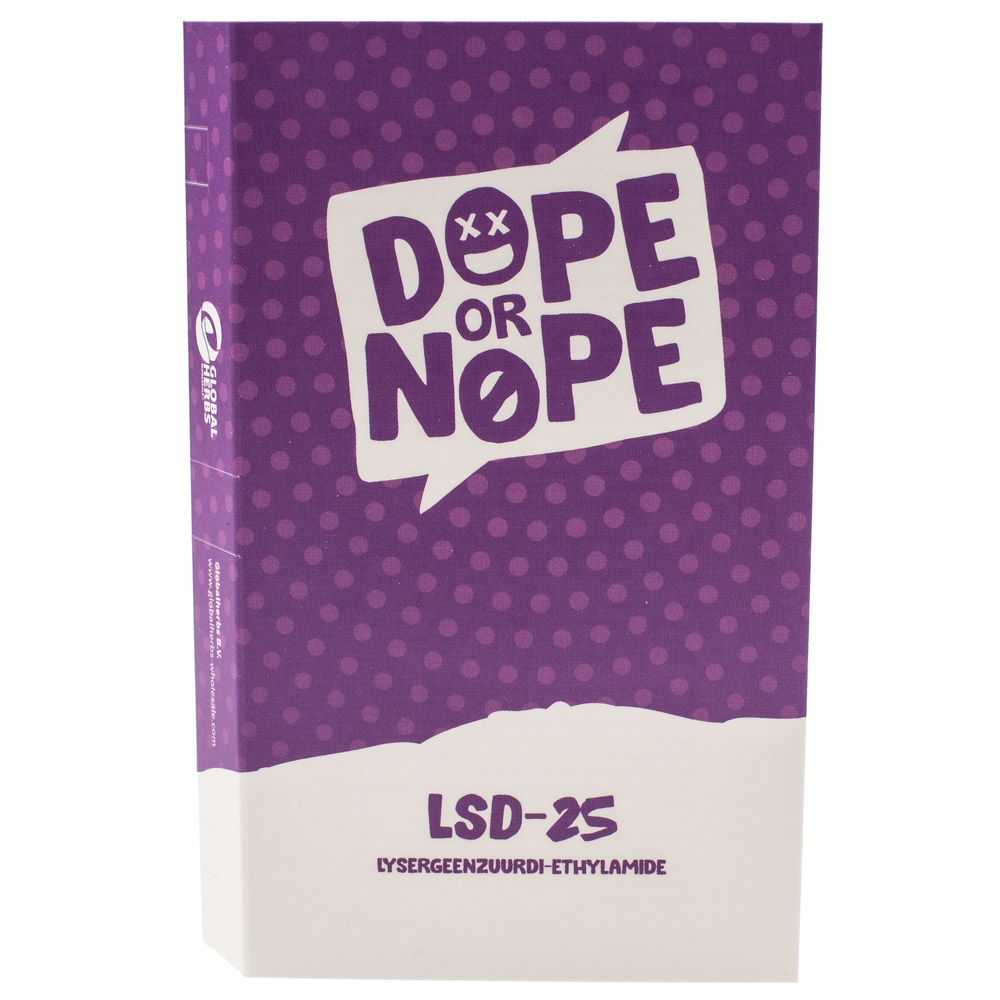
Dutch-Smart
LSD Test - Good or Bad
Single-use reagent test for a blotter, microdot or drop. A colour on the chart: LSD probably present. No reaction: not LSD.
€2.75 per test, incl. VAT
View at Dutch-Smart How the test works on dopeornopetest.comThe three composite trip reports follow this timeline through a whole day.