
An LSD trip changes perception, thinking and mood for many hours, while most people stay aware that the changes come from the drug. DRUGSinfo lists heightened sensitivity to sensory impressions, hallucinations, strong and changing emotions, and a different experience of time and space as the main mental effects (DRUGSinfo). How strong each of these is depends on the amount, the person and the place.
The Basel studies with healthy volunteers give a measured picture. Their participants mainly reported visual hallucinations, mixing of sound and vision, and a changed sense of themselves and their surroundings, which most of them rated as positive (Schmid et al. 2015). Published experience reports fill in what that means in practice.
Vision: patterns, movement and colour
Visual change is the effect people name first. At lower intensity, colours look more saturated, edges sharper and light more interesting. As the trip builds, surfaces seem to breathe or flow, fixed patterns such as carpet, wood grain or brickwork begin to move, and faces can look slightly different.
With closed eyes many people see geometric, fast changing imagery. DRUGSinfo describes objects that look distorted, moving patterns and coloured images. Most reports describe these as changes to what is there; full scenes that replace the room are less common and tend to belong to strong trips.
Sound and the mixing of senses
Music is central to most positive reports. It can sound deeper, more spatial and more emotional. At stronger levels senses can blend: sounds seem to produce shapes or colours. The Basel team measured this audiovisual synaesthesia as one of the main effects, and DRUGSinfo mentions it for higher amounts.
Time
Time distortion is one of the most reported effects. A few minutes can feel like an hour, and people lose track of how long anything has lasted. Even very small amounts of LSD changed timing in a laboratory task: in a London study, participants given microdoses reproduced intervals of two seconds and longer as longer than they were (Yanakieva et al. 2019). During a full trip, checking a clock often helps people orient, and in many reports it becomes a running joke.
Thinking
Thoughts jump, link up in unexpected ways and can loop. DRUGSinfo mentions recurring thoughts and surprising connections. Reports describe both: ideas that feel important, and thoughts that circle back again and again. Practical tasks such as handling money, cooking or answering messages become hard, and DRUGSinfo warns that judging whether something is safe, such as crossing a road, is impaired.
Emotion and the sense of self
Emotions are stronger and change faster. Laughter and tears can follow each other within minutes. In the Basel study, participants rated themselves as more open and trusting and closer to others during the session.
At stronger levels the boundary between self and surroundings can fade. Researchers call this ego dissolution. In a study comparing four doses, the highest dose produced more ego dissolution and also more anxiety than the next one down (Holze et al. 2021). The same experience that some people describe as beautiful can feel frightening to others, or to the same person on another day.
The body
LSD is also physically stimulating. The Basel studies measured higher blood pressure, heart rate and body temperature, and larger pupils. DRUGSinfo lists dilated pupils, dizziness, a slightly faster heartbeat, raised blood pressure, sometimes a slightly higher temperature and muscle cramps. Nausea, a tight jaw and cold hands come up regularly in reports, mostly in the first hours. Appetite is usually low until the evening.
What it is like the day after
Most reports describe tiredness, a quiet mood and a wish to talk through what happened. DRUGSinfo and FRANK both mention that some people later have flashbacks or lasting visual disturbances, sometimes called HPPD (FRANK). FRANK notes that little is known about why some people are more vulnerable than others. If visual changes keep returning, talk to a doctor.
Why the same blotter can feel different
Three things shape a trip: what is on the blotter, the person and the place. DRUGSinfo stresses that the effects depend strongly on personal factors, such as how someone feels physically and mentally, and on the setting. The first factor is the one people check least. A blotter can carry a different amount than expected, or a different substance altogether. That is why testing comes before the clock starts: see fake LSD.
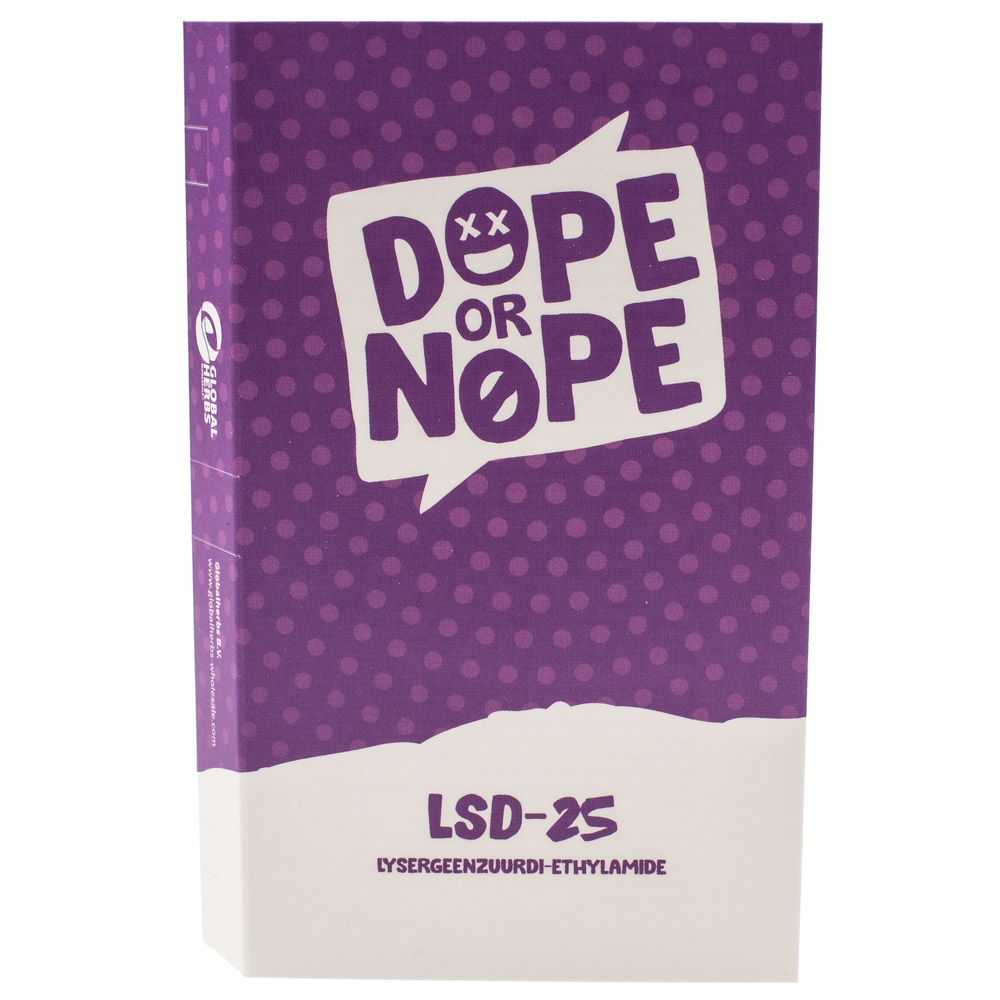
Dutch-Smart
LSD Test - Good or Bad
Single-use reagent test for a blotter, microdot or drop. A colour on the chart: LSD probably present. No reaction: not LSD.
€2.75 per test, incl. VAT
View at Dutch-Smart How the test works on dopeornopetest.comHow these effects are spread over the hours is on the timeline; how they play out in a whole day is in the trip reports.